How Trainwatch detects trains at a crossing
Three sensors work together: ground vibration feels the train coming, a magnetometer knows when its steel is sitting on the crossing, and a camera confirms it. Everything sits on public property, outside the railroad right-of-way.
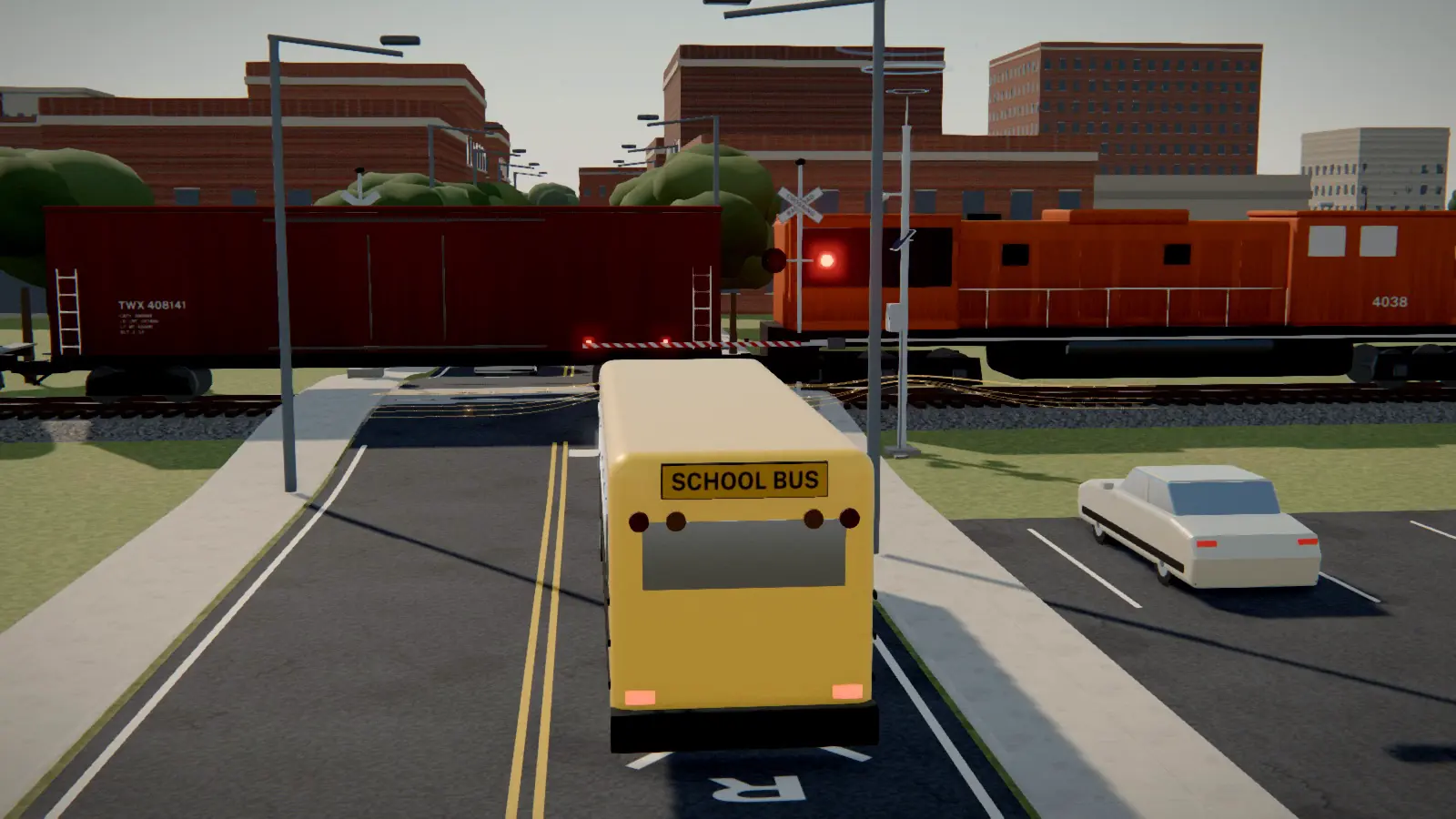
verifies
How a node tells a passing train from a stopped one
A stopped train makes no vibration, but its steel still bends Earth's magnetic field. Pairing a magnetometer with the vibration sensor and a camera is how a node tells a passing train from one that has stopped across the road.
Why a magnetometer
- A magnetic sensor detects a vehicle by measuring "the perturbation in the Earth's quiescent magnetic field caused by a ferrous metal object," and with a multi-axis fluxgate magnetometer, "vehicle motion is not required for detection."
FHWA Traffic Detector Handbook, 3rd ed. (2006) - Earth's field is roughly 25–65 microtesla depending on location. Steel concentrates the field lines, which is the shift the sensor reads.
NXP Semiconductors (2015) - A Transportation Research Board study tested 3-axis magnetometers to detect trains for crossing warnings. Its three-axis readings could tell different vehicles apart and separate them from noise.
TRB High-Speed Rail IDEA Project 53 (2006)
What that means in the field
- Placement matters. The same TRB study found the signal falls off with the cube of distance, so the magnetometer sits at the curb close to the crossing, on city property. Each site's setback is set in the survey and checked with a field test before go-live.
- Calibration is built in. The study saw readings drift with temperature and recommended periodic auto-calibration; nearby power lines can add noise. The board recalibrates its baseline while the crossing is clear.
- Cross-checks cut false alarms. A truck changes the field but doesn't shake the ground like a train; a train-sized vibration without a field shift at the crossing is still upstream. The camera settles the rest.
Where Trainwatch is today
Trainwatch is at the design stage and not yet funded to build. The parts list is set, and each part is already proven in traffic or rail use. What hasn't been done is running our integrated node at a live crossing; a city pilot is where that happens.
| Piece | Already used or tested | Source |
|---|---|---|
| Magnetic vehicle detection | Long used to detect vehicles at intersections. With a multi-axis magnetometer, "vehicle motion is not required for detection," so a stopped vehicle still registers. | FHWA Traffic Detector Handbook (2006) |
| Magnetometers on trains | 3-axis magnetometers were tested to detect trains for crossing-warning activation and could tell different vehicles apart. | TRB High-Speed Rail IDEA Project 53 (2006) |
| Train sensors on public right-of-way | San Antonio's AWARD system put radar and acoustic train sensors on poles along public right-of-way, avoiding railroad property, and posted delays on message signs. Deployment cost $350,785 in 1998. | USDOT ITS Knowledge Resources |
| Corridor train monitoring | Sugar Land, Texas ran a radar-based train monitoring system on US 90A that TTI called "very stable, reliable." Its noted weak spot was trains that slow or stop, which is the case a magnetometer covers. | Texas A&M Transportation Institute (2003) |
| City blocked-crossing map | Houston launched a city-run map in 2025 that uses sensors at crossings to show which are clear and which are blocked. | KPRC 2, Aug 18, 2025 |
| State freight planning | TxDOT's freight strategy lists blocked-crossing detection with advance notification, budgeted at $91K–$111K per site plus $9K–$12K a year, and says it "reduces crashes caused by queuing." | TxDOT freight strategy |
What's different about Trainwatch is the combination: a stopped-train signal from the magnetometer, a record built for federal grant applications, and a pilot sized for a small city's purchasing rules. Every animation on this site is an illustration of the design, not footage of installed hardware.
Warning time depends on sensor placement
A sensor can only report a train that has reached it. Placing sensors upstream of town is what buys time: warning equals distance divided by speed.
The FRA inventory lists a 79 mph maximum timetable speed on Norman's line; trains in town often run slower. Speeds here are inputs, not measurements.
Three signals, one answer
Vibration, magnetic field and camera check each other before an event is logged.
Grant-ready records
Arrival, departure and duration for each event, tagged with the crossing's DOT number.
Runs on its own
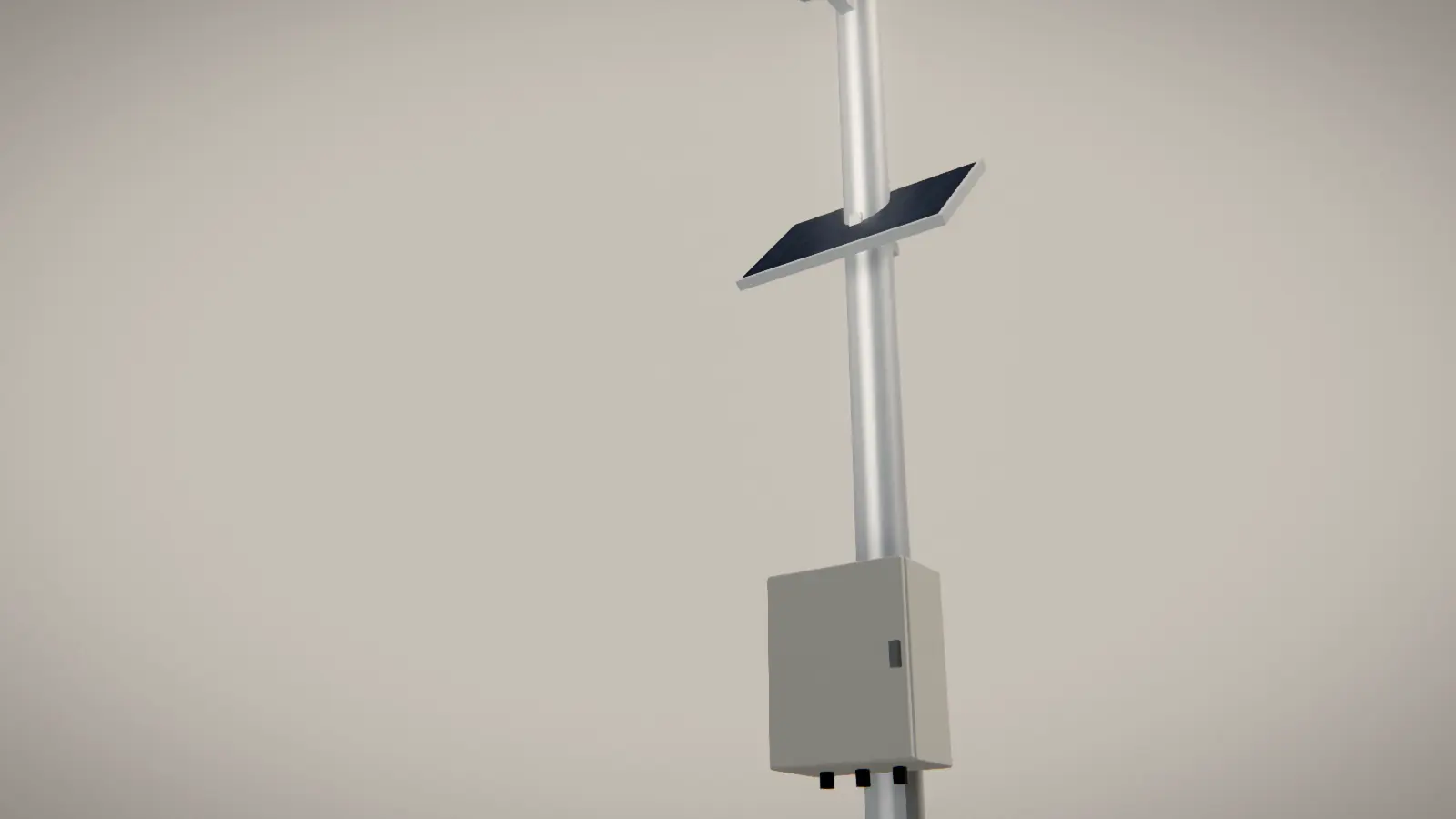
Cellular data, with solar power and battery backup where needed. No city network, no pavement cuts.
What each event record contains
Each blockage becomes one clean row you can sort, total and hand to a grant consultant.
012208XTechnical FAQ
Do we need the railroad's permission?
No. Everything installs on public property outside the railroad right-of-way, so there's no railroad agreement to negotiate. Normal city permits for work in the public right-of-way still apply.
Why add a magnetometer?
Vibration tells you a train is moving nearby, but a stopped train is silent. Its steel still bends the magnetic field at the curb, so the magnetometer keeps reporting "train present" for as long as it sits there. That's what turns a crossing alert into an accurate blocked-minutes record.
How close to the tracks does the magnetometer go?
Close enough to read the train's steel, which falls off quickly with distance, and on city property at the curb. The exact setback for each crossing is set in the site survey and confirmed with a field test before the pilot goes live.
Does it need our network or power?
No. Each unit has its own cellular connection and can be equipped with solar power and battery backup, so nothing touches your IT systems.
Who owns the data?
Your city owns every record. We process and format it; we don't sell or license it. You get a full export whether or not you continue after the pilot.
Do the cameras record people or license plates?
The camera's job is to confirm a train is at the crossing. How long any imagery is kept, and who can see it, is set in writing with your city before installation, and the pilot can be configured to keep only the event record.
How does it work with dispatch?
Alerts can go to dispatch staff, message signs and a live map. Integration with your specific dispatch software is scoped during the pilot.
See it on your crossing.
We'll survey your corridor and show where sensors would go.